Neuroplastic pain
What these providers treat, and why the mechanism makes it reversible.
Most people with neuroplastic pain have already seen plenty of clinicians. The hard part is finding one who works with the pain system itself. Tell us where you are and we'll point you toward providers who do.
How do you find a neuroplastic pain provider?
Look for clinicians trained in pain reprocessing therapy, pain neuroscience education, or mind-body approaches to chronic pain. They may be psychologists, physicians, physical therapists, or coaches. Karuna maintains a directory of providers working this way and will point you toward ones in your area at no cost.
A referral here is an introduction, not a booking, and it isn't medical advice. Karuna does not employ or supervise the providers listed.
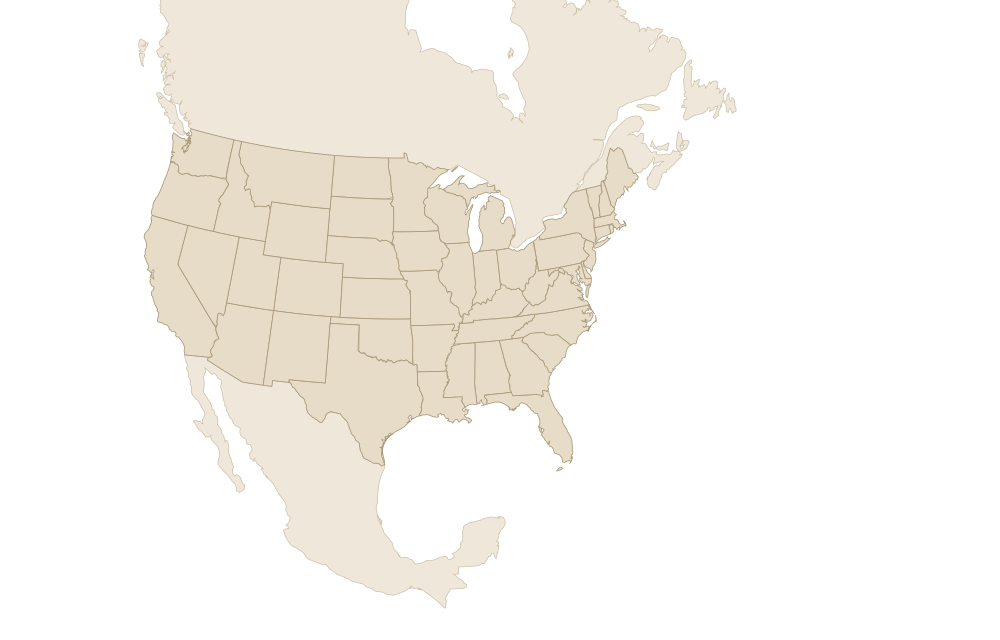
Select a marker to see the providers there, or read the full list by region below.
There is no board certification in 'neuroplastic pain', which makes this harder than it should be. What you're actually looking for is a clinician who understands that chronic pain can be produced and maintained by a sensitized nervous system, and who treats accordingly.
A useful question on a first call: 'How do you think about pain that persists after the tissue has healed?' The answer tells you almost everything about whether this provider will help.
Providers across the United States, Canada, and Mexico who work with neuroplastic and mind-body approaches to chronic pain. The mix is deliberately broad, because the useful skills are spread across professions:
Listing is not an endorsement, and it is not a credential check. Karuna does not employ, supervise, or vet the clinical practice of the providers in the directory. Verify licensure and fit yourself before starting care with anyone.
If nobody in the directory covers your area, we'll say so plainly rather than send you a poor match. We will also point you toward telehealth options that work across state lines.
Your details go to Karuna's care team so they can respond. Nothing you write is published, shown to other visitors, or stored on this site. The free-text box is optional and exists only so you can add context if you want to. Please don't feel you need to describe your medical history to get a referral.
Sometimes a local provider is the honest recommendation, and sometimes a structured programme fits better. Karuna runs a 12-week virtual course of VR embodiment training with weekly one-on-one pain coaching and clinician oversight. How it works has the detail.
That tends to suit people whose pain has persisted despite medical evaluation, who want something structured rather than weekly appointments, and who have no suitable provider nearby. If you'd rather work with someone locally and in person, a directory referral is the better route. Say so on the form and the team will treat it that way.
A referral is not urgent care. Some symptoms need medical assessment before any pain-retraining approach, and this list is not something to work around.
Nothing on this page is medical advice, and a directory referral is not a clinical assessment. Talk with a qualified healthcare provider about your symptoms before starting, stopping, or changing any treatment.
No. The referral is free and there is no obligation to book anything with anyone we suggest.
The providers themselves set their own fees and insurance arrangements. Ask them directly, since these vary widely between professions and states.
Providers are listed because they work with neuroplastic and mind-body approaches to chronic pain, but listing is not an endorsement or a credential check.
Karuna does not employ, supervise, or take responsibility for the clinical practice of listed providers. Verify licensure and decide on fit yourself before starting care.
We'll tell you plainly rather than send a poor match, and point you toward telehealth options. Many providers work across state lines within their licensure.
Karuna's own 12-week programme is delivered entirely from home, which makes location largely irrelevant if a structured course suits you.
No. The only required fields are your first name, your email, and the state you're looking in.
The free-text box is optional. A sentence about what you're dealing with helps the team match you well, but there's no need to write a case history, and nothing you write is published or shown to other visitors.
Usually within two business days, by email.
If your pain is severe, changing quickly, or comes with red-flag symptoms, contact your doctor now rather than waiting to hear from us.
Talk with our care team about your pain, your history, and whether KVET™ is right for you. Free, and from the comfort of home.